
Bag crafting, cape crafting, and the quiet shelf
The crafts nobody brags about
Nobody streams bag crafting. In Albion Online, bag crafting and cape crafting sit on the market's quietest shelf, alongside gathering tools, off-hands and saddler goods: the crafts that never headline a meta video because none of them swing a fight. That is precisely their economic character: they are bought like groceries, not like lottery tickets. Unglamorous has never meant unprofitable, and this shelf is the standing proof.
Call it the miscellaneous family: everything craftable that isn't combat gear, refined materials, potions or food. What unites it is who buys it: which is, in one way or another, everyone.
The demand floor
Every character in the game equips a bag, because carry weight is never optional. Every build fills its cape slot, whatever the loadout. Every gatherer and fisher holds a tool, and tools lose durability with use, so the gathering economy consumes them and comes back for more. That last part matters: gear demand saturates when everyone owns the piece, but a tool wearing out is demand that renews itself on a schedule.
Then multiply by alts. Every fresh character, every gathering alt, every laborer mule starts with an empty bag slot and an empty cape slot. The result is a demand floor that never drops to zero, not deep on any single item, but broad across all of them, every day, at every tier.
Why competition stays thin
The crafting crowd follows the spotlight. A balance patch lands, a weapon enters the meta, half the server's crafters pile into it, and the margin is arbitraged flat within days, then the meta shifts and prices whipsaw again. That boom-bust cycle is the gear market's defining rhythm, and it largely skips the boring shelf: no patch makes bags fashionable, so no stampede ever floods the market. Fewer competitors, steadier prices, margins that survive being discovered.
Nobody brags in city chat about bag profits, which is precisely why they persist. The honest trade-off: these margins are modest. This is steady-wage crafting, not jackpot hunting, and anyone promising otherwise is selling something.
The index-fund profile
If gear crafting is stock-picking: concentrated bets on what the meta wants this week: the miscellaneous shelf is the index fund. Demand is flat and broad rather than deep on one tier: a T4 bag and a T7 bag both sell, constantly, to different buyers. Capital per craft is low, so a pricing mistake costs thousands of silver, not millions. Turnover is fast, so silver isn't parked in inventory waiting for a speculative price to arrive. Less upside per craft, far less variance: and variance is what quietly bankrupts new crafters.
The compounding trick is the same as in any index: volume. A modest margin realized twenty times a day beats a spectacular margin realized twice a week.
The cape wrinkle
Capes carry one complication worth knowing before you price them. The city-faction capes: each with its own distinct effect, require faction materials that only come out of faction warfare. Their input market is therefore thinner and spikier than cloth and leather: when faction activity is low, materials dry up and cape prices climb; when a faction pumps, materials flood the market and the crafting margin opens wide for whoever is watching. Basic capes behave like bags; faction capes behave like a small commodities market bolted onto one.
Same math, same discipline
Under the hood this is ordinary crafting: cloth and leather dominate the bag and cape recipes, city crafting bonuses apply, the return rate lowers your real material cost exactly as it does for gear, and the station fee plus sales tax: 4% with premium, 8% without, come off the top. The full cost-side checklist is covered in the what-to-craft guide; everything there applies here unchanged.
The discipline transfers too. Work from fresh prices and sanity-check asks against trade history: a quiet market is exactly where one troll listing can distort a margin. And before scaling up a bag line, check the price and volume history to confirm the margin is standing, not a one-day blip.
Doing it without spreadsheets
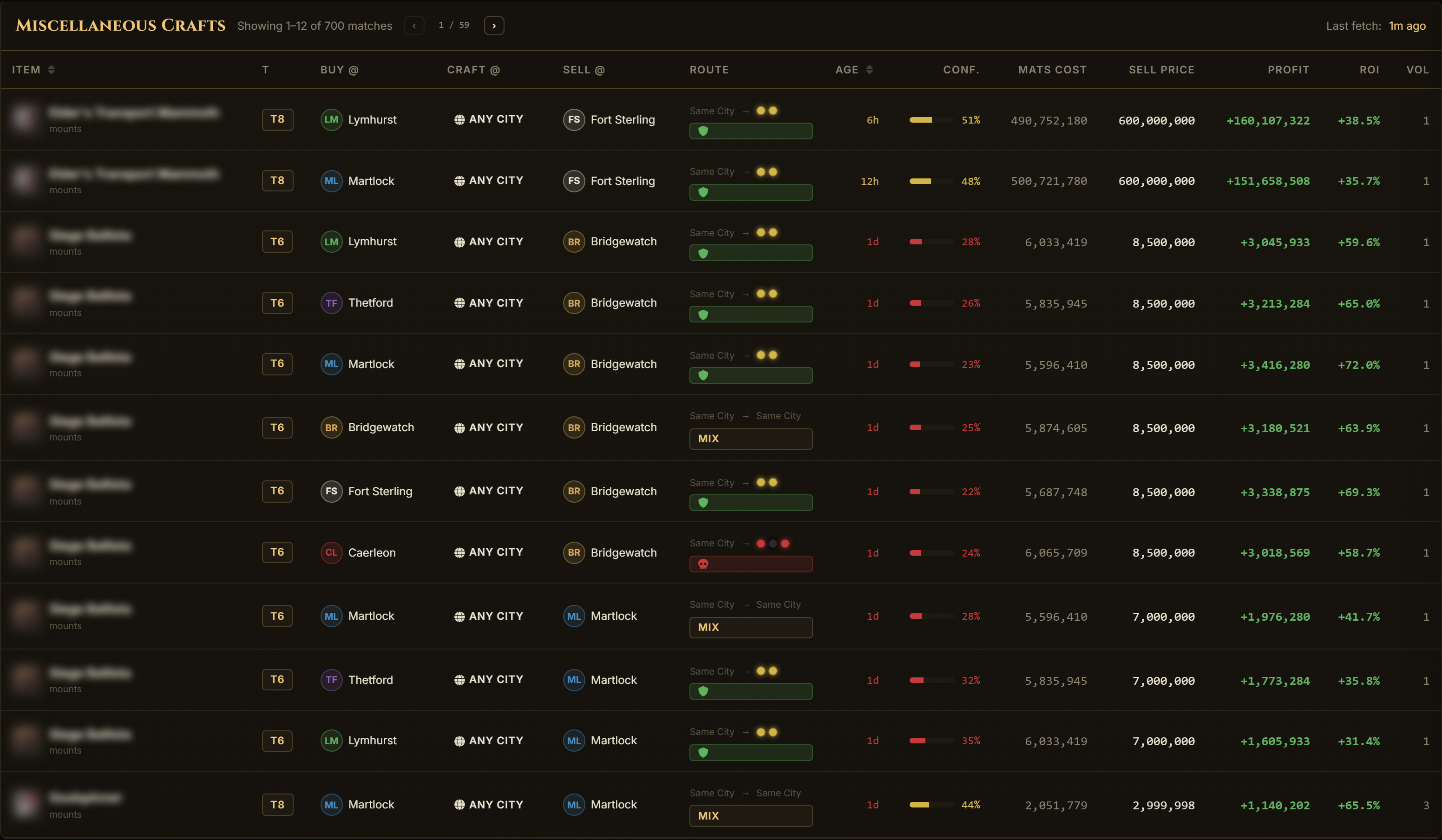
Everything above is arithmetic on live data, which means it automates. The Miscellaneous tab in Profit Forge prices the whole quiet shelf: bags, capes, tools, off-hands and the rest, across every tier and enchantment, with your premium status, tax, station fee and return rate applied, and re-sorts the results every five minutes. Every row shows its data age and a confidence score, so a stale price can't masquerade as profit, and the best cities to buy materials and sell the finished piece are picked per row.
FAQ
Are bags profitable to craft in Albion Online?
Usually, modestly. Bags sell at every tier because every character equips one, and few crafters compete for the market. The margins are steady rather than spectacular, and they still depend on live prices: material cost after your return rate, station fee and sales tax against today's sell price. Check current numbers before committing silver.
What should a new crafter make first in Albion Online?
The unglamorous shelf: bags, capes and tools, is the gentlest entry into crafting. Capital per craft is low, buyers exist at every tier, and demand renews itself daily, so mistakes are cheap and stock actually moves. Verify the margin on live prices first; even a forgiving market won't pay for a craft that costs more than it sells for.
Why do capes cost so much in Albion Online?
City-faction capes need faction materials earned through faction warfare, so their input supply is thinner and spikier than ordinary cloth and leather. When faction activity is low, materials get scarce and cape prices climb; when a faction pumps, materials flood in and margins open for crafters watching the input market.
Do tools sell well in Albion Online?
Constantly. Gathering, fishing and demolition tools lose durability with use, so the gathering economy consumes them and comes back for more: demand that renews itself instead of saturating. The volume is spread across tiers rather than concentrated in one, which suits crafters who want turnover over speculation.