
Salvage flipping: silver from gear nobody wants
What Albion Online salvaging actually is
Albion Online salvaging is destruction with a refund: break a piece of gear and a fraction of its crafting materials comes back, the bars, cloth, leather and planks the recipe consumed, plus artifact fragments if the piece was artifact gear. The piece is gone; the materials are yours to sell.
On its own that sounds like a loss, and for gear you could actually sell, it usually is. The trade hiding inside it is salvage flipping: buy gear that's listed cheaper than the materials it salvages into, break it, and sell the materials. When that gap exists, someone on the market is quite literally selling you bars and leather at a discount, wrapped in a sword.
Why the gap exists: two crowds, two prices
Gear prices and material prices are set by different crowds. The people selling gear are mostly dumping loot: players clear dungeons faster than they wear equipment out, so markets fill with pieces the seller will never wear and prices to match: listed to clear, not to maximize. The people buying materials are crafters, and their demand is steady: a crafter needs bars every day regardless of what dropped in anyone's dungeon.
A flooded sell side priced by impatience, meeting a buy side priced by steady demand: that's the whole trade. Whenever a piece lists below the value of its own recoverable materials, the difference is free silver that most players walk past, because nobody looks at a mediocre spear and sees the planks inside it.
The math per piece
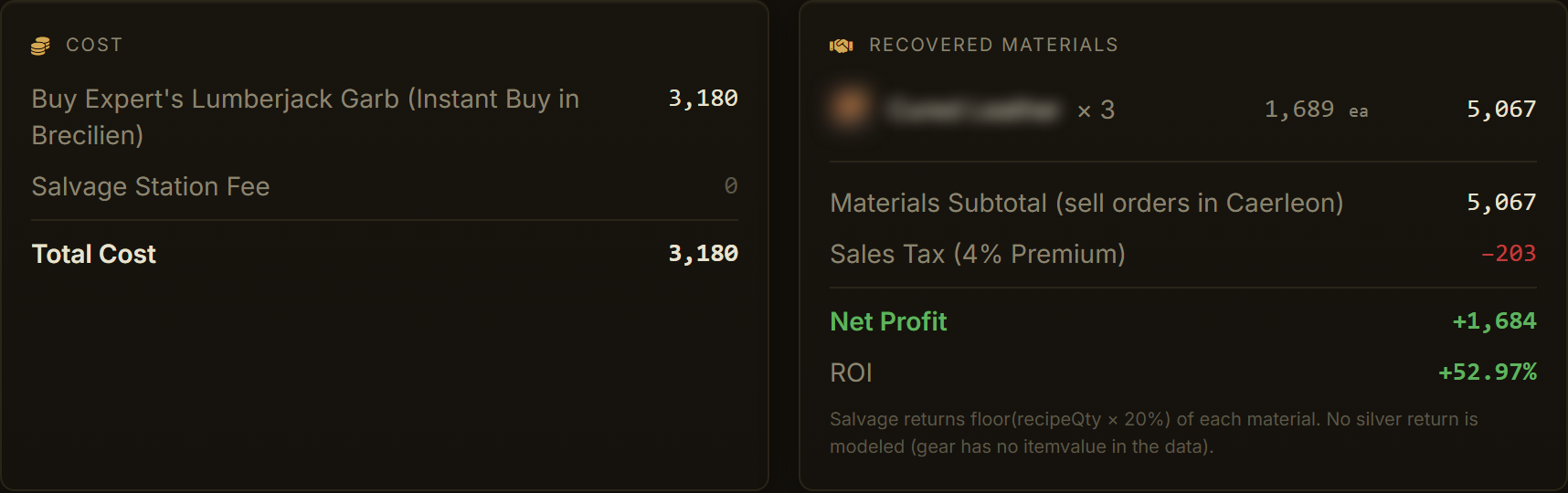
One line decides every flip: recovered material value × (1 − tax) − gear buy price. The recovered value is each material in the piece's recipe, times the salvage return rate, times that material's current market price. The tax is the usual sales tax on what you sell: 4% with premium, 8% without, and if you list the materials as sell orders instead of instant-selling, the 2.5% listing fee joins it.
The sell side is the comfortable half of this trade. Materials are commodities with deep markets: unlike the gear itself, which might wait days for a buyer, bars and cloth move by the stack. The traps are elsewhere. The recovered value must be computed from real, fresh material prices: one troll-priced material in the basket inflates the whole recovered value, which is exactly the failure the realistic-revenue anchor exists to catch. And quality and enchantment change both sides of the line at once: a higher enchant means pricier enchanted materials come back, a higher quality changes what the piece costs to buy: so every quality/enchant combination is its own little market with its own gap or lack of one.
Where the deals hide
The cheapest gear on any market is the gear nobody wants to wear: off-meta weapon lines, odd qualities, builds that fell out of fashion three patches ago. Their owners know demand is thin and price accordingly. But salvage doesn't care about the meta: an unfashionable spear salvages into exactly the same planks and bars as a fashionable one. Unpopularity discounts the buy side and leaves the sell side untouched, which is why the ugliest listings are so often the best flips.
The other rule is speed. A piece listed far below its material value is a mistake, and mistakes get corrected, by you or by the next flipper who checks. The ask you act on must be current: a bargain observed an hour ago may already be in someone else's inventory, which is why the age of every price in the calculation matters as much as the margin it promises.
The risk profile: wages, not lottery wins
Here's what separates salvage flipping from nearly every other trade in the game: the entire loop happens in one city. Buy the piece, walk to the market's salvage option, sell the materials: no hauling, no red zones, no ganker deciding your margin for you. Market flipping across cities pays better precisely because it's danger pay; salvage collects a smaller margin for zero exposure.
Plainly: the margin is small because the risk is small, salvage pays wages, not lottery wins. What keeps those wages flowing is that the work is unglamorous: pricing a recipe's materials times a return rate across hundreds of listings is tedious enough that almost nobody does it, and the niche stays uncrowded.
The artifact bonus
Artifact gear adds a twist: salvaging it also returns artifact reagents: Runes, Souls, Relics, on top of the ordinary materials. Reagents have a market price of their own, so they simply join the recovered basket in the math above. But they open a second door: fifty identical reagents can be melded into a random artifact at the Foundry. Whether to sell them raw or feed them into that gamble is its own expected-value question, priced out in the artifact melding guide. For the salvage flip itself, the honest baseline is what the reagents sell for today: melding is a separate trade you can choose after.
Doing it without spreadsheets
Everything above is arithmetic on live listings, hundreds of pieces, each priced against its own recipe, return rate and current material prices: which means it automates. The Salvage tab in Profit Forge runs the model the guide documents: every listed piece priced against the value of the materials it salvages into, sorted by profit, with ROI, volume, confidence and the age of every price in the math, recomputed every five minutes, because cheap listings don't wait.
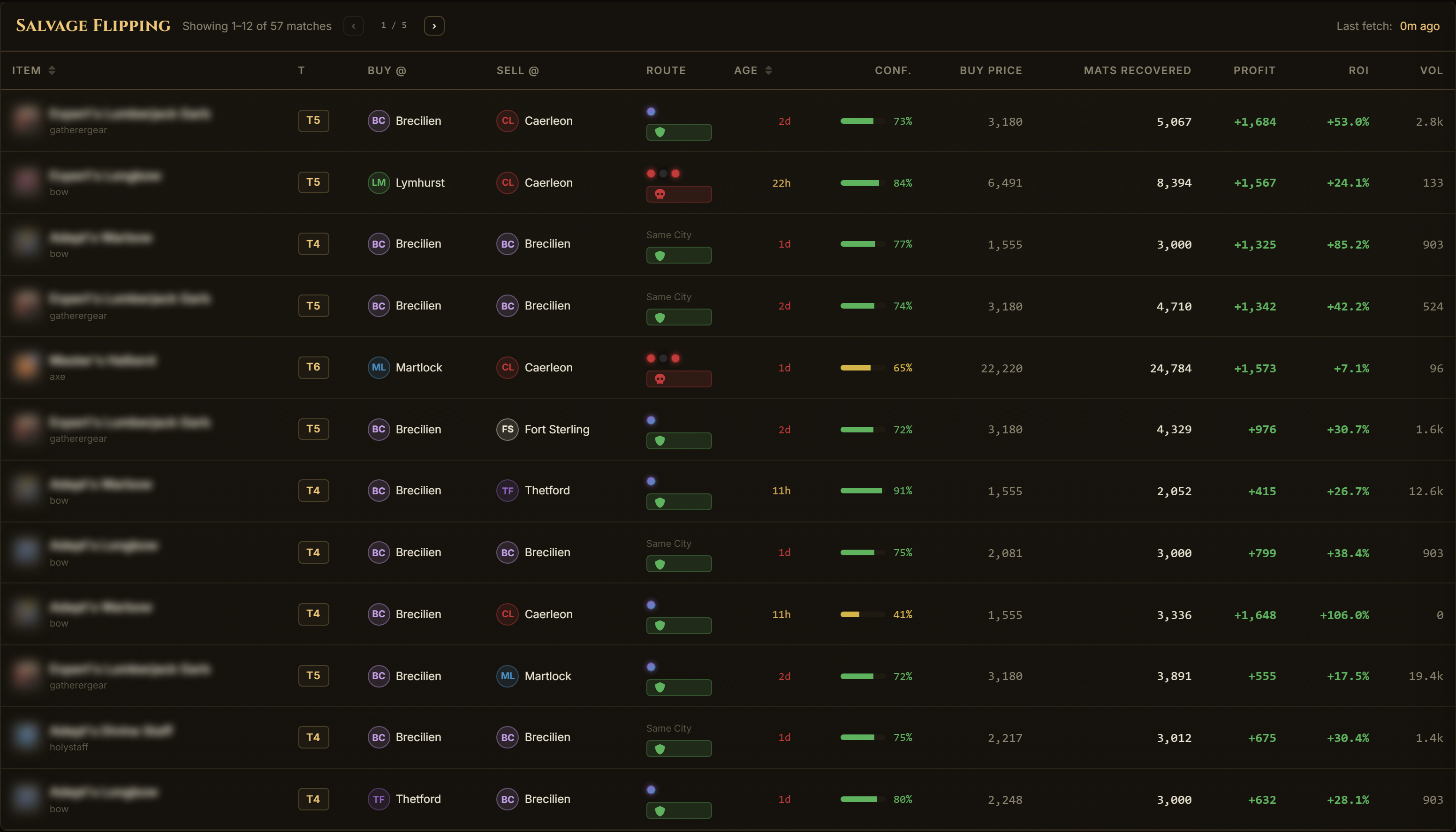
Open a row and the flip is itemized: what the piece costs to buy, exactly which materials come back out at the salvage return rate, and what each is worth right now: so you can see whose price the margin rests on before you commit silver to it.
FAQ
Is salvaging profitable in Albion Online?
Yes: whenever a piece of gear is listed for less than the after-tax value of the materials it salvages into. That gap appears constantly because gear sellers dump loot to clear it while material buyers are crafters with steady demand. The margin per piece is modest, but the loop is nearly risk-free: buy, salvage and sell in the same city.
What gear should I salvage for profit?
Whatever currently lists below the value of its own recoverable materials: and that set changes constantly as listings get bought out and new loot floods in. Off-meta items, odd qualities and unpopular weapon lines are cheap most often, because nobody wants to wear them while their materials are worth the same as any. There is no permanent list.
Do I lose silver salvaging my own gear?
Usually, yes: salvaging only returns a fraction of a piece's crafting materials, so if the piece would actually sell on the market for more than that recovered value, selling it intact is the better trade. Salvage your own gear when it's the kind nobody buys, or when its market price genuinely sits below its material value.
Does premium matter for salvage flipping?
It matters more here than in most trades. Sales tax on the recovered materials is 4% with premium and 8% without, taken off revenue: and salvage margins are thin by nature, so the extra four points can be the difference between a profitable flip and a break-even one.