
The Albion Online gold price, explained
Two currencies, one bridge
The Albion Online gold price: how many silver one gold costs, is one of the few numbers in the game that no developer sets. It comes out of a player-driven exchange, floats freely with supply and demand, and quietly prices the things that matter most: premium time, vanity items, and the real-money value of every silver stack you own. Understanding it starts with the two currencies themselves.
Silver and gold enter the world through opposite doors. Silver is earned: every mob bounty, market sale and crafting margin pays it, in whatever quantity players generate. Gold is bought: it enters when someone purchases it for real money, and it leaves when someone spends it on premium or vanity items. Nothing in the game converts one into the other automatically.
The bridge between them is the gold market, an exchange with its own order book, where players trade gold for silver at whatever price a buyer and a seller agree on. No NPC pegs it, no patch note fixes it. The rate you see quoted is simply where the two sides of the book met most recently, which is why it moves continuously, like any real exchange rate.
What the rate actually measures
The most practical reading of the gold to silver rate: it is the silver price of premium time. Premium is buyable with gold, and gold is buyable with silver, chain the two and the rate tells an in-game earner exactly what a month of premium costs in the currency they actually farm. When the rate rises, the same premium costs more silver; when it falls, premium gets cheaper in silver terms, even though its gold price never moved.
The same logic generalizes: because gold is the currency real money buys, the rate is the exchange rate between in-game wealth and real-world value. A rising rate means every hoarded million of silver buys less of anything gold-denominated; a falling one means your silver stretches further. Whether premium itself earns back its cost is a separate question: the premium economics guide works that loop in full: but whatever premium is worth to you, the gold rate decides what you pay for it.
What moves the gold price
Only one thing, in the end: the balance of the order book. The rate has a demand side and a supply side, and reasoning about it means asking which is heavier right now.
More silver chasing gold pushes the rate up. When lots of players are active and earning, and a good share of them fund premium from in-game income rather than cash, silver piles up against a gold supply that didn't grow with it. Every earner converting for premium is a buy order; enough of them and the price climbs.
More gold entering pushes the rate down. Gold arrives through real-money purchase, and whenever buying it is more attractive than usual, more of it reaches the exchange and gets sold for silver. More sell-side gold against the same silver demand means a cheaper rate.
The useful discipline is that you don't need to predict any of this. The order book already aggregates every player's activity, wallet and intention into one number. Your job isn't to forecast the rate: it's to notice where it is relative to where it has been, and act on the difference.
The decisions the rate drives
When to convert for premium. The player who checks the rate only on the day their premium expires pays whatever that day charges. The patient buyer watches a floating rate wobble for a few weeks and converts on a dip: same gold, fewer silver. Because the rate genuinely floats, those dips exist; because premium can be bought ahead of expiry, you're allowed to wait for one. That's the entire edge, and it costs nothing but attention.
Where to keep savings. Some long-term players hold part of their wealth in gold rather than silver, treating it as the game's hard currency: silver is minted endlessly by gameplay, while gold only enters through purchase and leaves through spending. That's a game-mechanics observation, not investment advice, but it explains a real behavior you'll see in every veteran guild: when the rate dips, some of the buying isn't for premium at all. It's savings changing denomination.
Honesty note: nobody times the gold market reliably, not veterans, not spreadsheets. What watching the rate actually buys you is smaller and real: the difference between converting blind and converting informed.
Instant vs placed orders
The gold market gives you the same two moves as every other market in Albion. Trade instantly at the current rate: you fill against the best existing order on the other side, which means you accept the spread as the price of immediacy. Or place your own order at the rate you want, for a flat 10-silver fee, and wait for the market to come to you. The fee is trivial; what an order really costs is patience: and what it buys is the spread, plus the chance to name a dip price in advance and let the market fill it while you play.
For a routine conversion, the instant rate is fine. For a chunky one: a quarter of premium, a savings move, the placed order is the grown-up tool: decide your price when you're calm, post it, and stop watching. It's the same instant-versus-order literacy the item markets teach, applied to the one market everyone eventually uses.
Watching it without logging in
Everything above assumes you can see the rate, and that's the annoying part. It moves around the clock, but checking it means logging in and opening the exchange, which nobody does often enough to actually catch a dip. A floating price you look at twice a month might as well be fixed.
Profit Forge keeps the rate on screen: the app's header carries a live gold ticker: the current gold to silver rate with its 24-hour change: so every visit to check crafting margins is also a glance at the exchange. A rate with its recent change attached is what turns a number into a decision: it tells you whether you're looking at a dip or a drift.
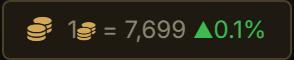
The habit it supports is the one this whole page argues for: context beats snapshots. The tool applies the same principle to every price it touches: price and volume history for judging whether a number is a trend or a spike, and visible data age on every row so you know how current what you're reading is. The gold ticker is that philosophy applied to the one price every player shares.
FAQ
How does the gold market work in Albion Online?
The gold market is a player-driven exchange with its own order book. Players post buy and sell orders for gold priced in silver, a placed order costs a flat 10-silver fee, or trade instantly at the current rate. No NPC pegs the price and no developer sets it: the rate floats freely with supply and demand, which is why it moves continuously.
When should I buy gold with silver?
If you can wait, on dips. The rate floats, so a patient buyer who converts when it drifts down pays less silver for the same gold than someone forced to convert the day their premium expires. But nobody times the gold market reliably, the realistic edge is not prediction, it's converting on a dip you actually saw instead of converting blind at whatever the rate happens to be.
Can you buy premium with silver in Albion Online?
Not directly, but the loop is two steps: earn silver, convert it to gold on the gold market, then spend the gold on premium. That exchange is exactly how in-game earners fund premium without spending real money: and why the gold price matters even to players who never touch a cash purchase.
Why does the gold price change in Albion Online?
Because it is set purely by player supply and demand. When more silver chases gold: lots of active earners funding premium from in-game income: the rate rises. When more gold enters the exchange and gets sold for silver, the rate falls. There is no official price underneath; the order book is the price.